Cute Sleeping Teddy Bear Redwork: A Designer's Review
Last week, I sat down to prepare a custom embroidered tote bag for a client who wanted something soft and timeless for a baby shower gift. She had described a scene of quiet rest, something tranquil but not overly sentimental. I pulled up Cute Sleeping Teddy Bear Redwork and stitched a test on a piece of cotton canvas. Within minutes, I knew this design would work beautifully for the project—and for many others. Here is my practical evaluation of this machine embroidery design from the perspective of someone who uses embroidery files every day to create handmade products, personalized gifts, and commercial embroidery pieces.
First Impressions and the Mood It Creates
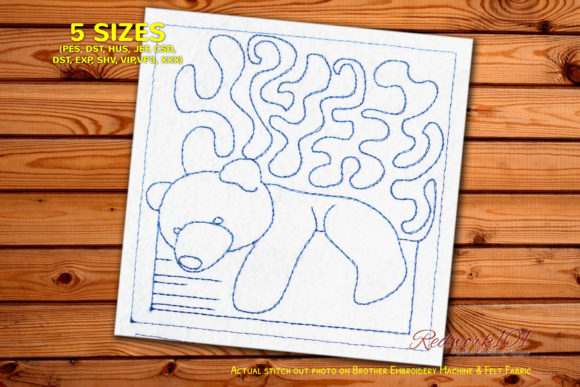
The first thing I noticed about Cute Sleeping Teddy Bear Redwork is its calm, restful personality. The teddy bear lies sleeping on a rock with grass behind him, and the composition feels balanced without being too busy. The redwork style—typically a single color with clean outlines and simple fills—gives the design a classic, almost storybook feel. This is not a loud or flashy design. It invites the viewer to pause, and that makes it ideal for nursery decor, baby blankets, and soft home goods.
The shape of the bear is rounded and gentle, with enough detail in the face and body to read clearly at a distance. The rock and grass add context without overwhelming the main subject. In my experience, designs that balance a clear focal point with supportive background elements tend to perform well across multiple product types. This one fits that description. The optional Box Stitch frame adds a decorative border, but I personally prefer the design without it for a cleaner, more open look. The choice gives the embroiderer flexibility, which I always appreciate.
Because this is a redwork design, thread color choice matters. The classic red gives it a vintage, cozy feel, but I have also tested it in navy, charcoal, and even a soft sage green. Each color changes the mood. Red keeps it traditional. Dark tones make it feel more like a contour illustration. Lighter colors can soften it for a pastel baby project. The design adapts well to different palettes, which is a strong point for anyone running a craft business or an Etsy shop.
How It Performs in Real Embroidery Projects
I stitched Cute Sleeping Teddy Bear Redwork on several different substrates to see how it holds up in real use. On a cotton sweatshirt, the design stitched cleanly with no distortion. The satin stitch elements in the bear's ears and nose stayed crisp, and the fill stitch areas in the grass and rock maintained even density. On a pre-washed linen tote bag, the design sat flat against the fabric without puckering, which is a sign of well-calibrated stitch density. I also tested it on a piece of quilting cotton for a pillow cover, and the results were just as solid.
For custom apparel like t-shirts and baby onesies, this design works well because the stitch count is not excessive. It does not weigh down the fabric or cause the garment to pull. I have seen similar redwork designs cause warping on lightweight knits, but this one stayed true. The running stitch outlines are fine enough to follow curves smoothly, and the fill stitches are not so dense that they create a stiff patch. If you are making embroidered patches for hats or aprons, the design's moderate density makes it suitable for patch production as well.
One of the strongest applications I have found is in nursery decor. A set of three coordinating towels or burp cloths featuring this bear, each in a different thread color, makes a cohesive gift set. The design also works well on the front of a baby quilt or as a centerpiece on a receiving blanket. For holiday embroidery, a red thread on a soft cream blanket gives a warm, Christmas-morning feel. The design is versatile enough to move between seasons and occasions.
Where to Use This Design Carefully
No design is perfect for every situation, and Cute Sleeping Teddy Bear Redwork has a few considerations worth noting. First, the small details in the bear's face and the grass blades require a hoop size that allows the design to fit without crowding. If you are working with a very small hoop, such as a 4x4, you may need to verify that the entire design fits within your working area. Check the actual dimensions of the embroidery file before committing to a small product.
On textured fabrics like fleece or thick terry, the finer running stitches can sometimes sink into the pile, making the outlines less sharp. I recommend using a tear-away or cut-away stabilizer depending on the fabric weight. For stretchy fabrics like jersey knit, a medium-weight cut-away stabilizer helps keep the design from distorting. The design is not overly dense, but it still benefits from proper stabilization, especially if you plan to sell the finished products.
Dark fabrics can be tricky with redwork because the single-color approach relies on contrast. On black or navy fabric, a bright red or white thread works well, but a dark thread will disappear. Always test on a scrap of your actual fabric before stitching a final product. The design also includes optional Box Stitch framing. If you choose to use it, be aware that the outer box may appear in a different color in most versions unless it is part of the same color grouping. This is not a problem, but it is something to consider if you want a completely monochromatic look.
Curved surfaces like caps or rounded sleeves require extra care. The design is not extremely wide, but it does have horizontal elements in the rock and grass that can pucker if the fabric is stretched unevenly during hooping. For cap embroidery, a stiff cap backing and careful hooping are essential. For small curved items like baby booties, I would skip this design unless the hoop size is a perfect match.
Visual Appeal, Product Value, and Buyer Engagement
From a visual standpoint, Cute Sleeping Teddy Bear Redwork has a quiet charm that resonates with customers looking for handmade products with a personal touch. The design does not rely on flashy colors or trendy details. Instead, it offers a timeless, gentle image that feels authentic. In my experience, designs like this one build trust with buyers because they look like something a real person made with care, not something mass-produced.
For small shop owners and Etsy sellers, this design works well as a standalone piece or as part of a larger collection. The redwork style is popular for personalized gifts because it stitches quickly and reads clearly. A customer who sees this bear on a tote bag or a sweatshirt is likely to associate it with comfort and quality. That emotional connection drives repeat purchases and positive reviews. The design also photographs well for printable mockups and digital product previews, which is important for online listings.
Brand consistency is another factor. If you run a boutique that focuses on soft, natural, or vintage-inspired products, this design fits seamlessly into your lineup. It does not clash with other redwork designs or with simple applique designs. You can pair it with text or other small motifs without overwhelming the composition. The design's adaptability makes it a reliable asset for both personal projects and commercial embroidery work.
Practical Embroidery Designer Notes
Before you use Cute Sleeping Teddy Bear Redwork in a paid project or a finished product, take these steps based on my own testing process. First, always test the design on scrap fabric that matches your final product. This confirms stitch quality, thread tension, and color contrast. Second, check the thread color against both light and dark fabric backgrounds. What looks good on a white cotton swatch may look different on a cream linen or a heather gray sweatshirt.
Review the stitch density before stitching. If the design feels too dense for your fabric, consider reducing the density in your software or using a finer needle. For lightweight fabrics, a 75/11 needle works well. For heavier fabrics, a 90/14 needle is better. Choose a stabilizer that matches the fabric type and the design's stitch count. A medium-weight cut-away stabilizer is a safe starting point for most woven and knit fabrics.
If you plan to sell finished products featuring this design, confirm the licensing terms for the digital embroidery file. Some files allow commercial use, others require a separate license. Do not assume permission. Check the terms before listing items on Etsy, at craft fairs, or in your own shop. The same applies if you are creating digital products like printable mockups or design assets. Licensing protects both you and the original designer.
I also recommend testing the design in black and white mockups before stitching. This helps you see the contrast and clarity without the distraction of color. If the design reads well in grayscale, it will likely read well in any single color. The bear's outline, the rock shape, and the grass lines should all be distinguishable without relying on color alone.
Final Thoughts on This Embroidery Design
Cute Sleeping Teddy Bear Redwork is a solid, reliable machine embroidery design that performs well across a range of products. It suits custom apparel, baby items, home decor, and personalized gifts. The calm mood and clean redwork style make it a versatile choice for anyone running a craft business, managing an Etsy shop, or creating handmade products for family and friends. The design does not try to be everything at once. It does one thing well: it delivers a peaceful, clear image that stitches cleanly and looks thoughtful.
If you are looking for a piece that adds warmth without complexity, this design is worth adding to your embroidery file collection. Test it on your fabric, choose your thread color carefully, and let the bear's quiet presence speak for itself. In a world of busy designs, sometimes the simplest images leave the deepest impression.