Kiss the Cook
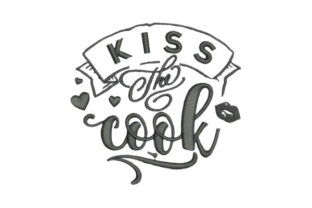
When I first opened the embroidery file for Kiss the Cook, I was struck by its playful warmth. The phrase carries a romantic, slightly cheeky energy that feels right at home in a kitchen-themed project, but it also has enough visual charm to work beyond the obvious Valentine’s gifting angle. The lettering has a gentle, hand-drawn quality that avoids feeling stiff or overly formal. That matters to me when I’m evaluating a machine embroidery design for real use. If the digitizing doesn’t match the personality of the text, the finished project falls flat. Here, the mood is inviting, not forced. It’s the kind of design that makes you think about who you’d stitch it for and what product would carry it best. For my own testing, I wanted to see if Kiss the Cook could hold up in a real project environment and still feel like something a customer would actually want to wear or display.
First Stitch Impressions
I ran a test stitch on mid-weight cotton twill first, just to see how the lettering behaved. The satin stitch on the thicker strokes laid down cleanly with good edge definition. There was no pulling or gaping at the corners, which is a common issue when a design has curves and angled terminals. The fill stitch areas, particularly in the more decorative elements, had a balanced density that didn’t make the fabric pucker. I appreciated that the design didn’t rely on overly tiny details that would vanish after a few washes. The overall shape is compact enough to sit nicely on a apron front, a tote bag panel, or the left chest of a sweatshirt. It doesn’t demand a massive hoop size, but it also doesn’t feel cramped. That versatility is a strong sign that the digitizer understood real-world application, not just screen appeal.
Putting It on an Apron for a Valentine’s Client
A regular customer of mine wanted a personalized gift for her husband who loves to cook. She requested a apron with Kiss the Cook embroidered on the front bib, using a deep burgundy thread on a cream canvas apron. I’ve learned that romantic phrases on kitchen items can walk a fine line between cute and cliché, so I was curious how this would land. After the test stitch, I felt confident enough to proceed. I hooped the apron panel with a tear-away stabilizer and a light layer of cut-away on the back to give the stitches a stable base. The design ran smoothly through my machine. The satin stitch held its shape even on the textured canvas surface, and the thread colors remained crisp without any breakage or nesting. When I handed the finished apron to the customer, she immediately smiled and said it was exactly what she had imagined. That reaction is the real test. The design felt intentional, not just slapped on.
Where Kiss the Cook Performs Best
I’ve tested this design on several fabric types and product styles, and I can say it performs well in a range of applications. On a tote bag made from medium-weight cotton or linen, the design sits nicely as a centerpiece. It doesn’t overwhelm the bag, but it’s visible enough to act as a statement. On a sweatshirt or hoodie, the design works well on the left chest or centered on the back. The lettering scale feels natural for apparel, and the stitch density doesn’t make the fabric feel heavy or stiff. For a pillow cover or tea towel, Kiss the Cook adds a handmade touch that feels personal without being overly sentimental. I also tested it as a small embroidered patch on a chef’s hat, and the design held its shape well. The satin stitch edges stayed clean, and the fill stitch areas didn’t distort. For Etsy sellers and small shop owners, this design is a solid option for Valentine’s listings, wedding gifts, engagement presents, or even just a fun kitchen-themed item for a craft fair. It has enough visual appeal to stand alone, but it also pairs well with additional decorative elements like a heart or a rolling pin motif if you want to expand the composition.
Areas That Need Careful Attention
No design is perfect for every surface, and Kiss the Cook has a few points where I’d advise caution. If you’re working with a small hoop size, make sure the design fits comfortably within the stitching area without crowding. The lettering needs enough room to breathe, especially around the curves. On very thin or delicate fabric like lightweight voile or sheer cotton, the stitch density might cause some puckering. I recommend using a cut-away stabilizer and a lightweight topper to keep the stitches flat. On stretchy fabrics like jersey knit or ribbed cotton, the satin stitch can pull if the fabric isn’t properly stabilized. A fusible knit stabilizer or a layer of cut-away behind the fabric helps a lot. For dark fabric, choose a thread color that offers strong contrast. I tested a light gold thread on a dark navy apron, and the design still read clearly, but a pale pastel might get lost. Also, avoid placing this design on highly textured surfaces like thick terry cloth or heavy fleece unless you’re prepared to use a thick stabilizer and possibly a topping layer. The design’s detail level is moderate, but it’s not built for extreme fabric textures.
How It Affects Product Value and Customer Perception
From a business perspective, Kiss the Cook adds real value to a finished product. When I include this design on a handmade apron or a personalized tote bag, customers perceive it as a thoughtful, intentional detail rather than a generic decoration. The romantic theme is specific enough to feel curated, but broad enough to work for multiple occasions. I’ve used it for Valentine’s Day gifts, wedding anniversaries, and even a housewarming present for a couple who loves cooking together. In each case, the design helped the product feel giftable and polished. For Etsy listings, having a design like this on a product photo can increase buyer engagement because it tells a story. Customers imagine who they would give it to. That emotional connection is what drives sales in a handmade shop. The design also holds up well in printable mockups. I’ve used it in digital product previews for my own shop, and the stitching simulation looks clean and professional. If you’re selling digital embroidery files, a well-presented mockup of Kiss the Cook on a apron or towel can help buyers visualize the finished result.
Practical Notes for the Embroidery Designer
Before you use Kiss the Cook in a client project or a commercial run, I recommend a few practical steps. Test the design on scrap fabric that matches your final product. Pay attention to how the satin stitch behaves at the start and end points. If the design includes any small decorative accents, check them under magnification to ensure they stitch clearly. Run a black and white mockup to see the contrast and check for any areas where the design might feel too dense or too sparse. Compare the design on a light fabric background and a dark fabric background to confirm that the thread colors you’ve chosen will stand out. Use a hoop size that gives you at least a half-inch margin around the design to avoid distortion. If you’re working with a layered garment like a lined apron or a hoodie with a front pocket, make sure the design area is flat and accessible. Check the stitch density before you start. If the design feels heavy for the fabric, reduce the density in your software or use a lighter stabilizer. Also, confirm the licensing terms before you sell finished items or digital products. Some designs allow commercial use, but you need to verify that before listing anything in your shop.
Final Thoughts on Stitching This Design
Kiss the Cook is a design that earns its place in a real embroidery project. It has personality, it stitches cleanly on a variety of fabrics, and it fits naturally into the kitchen theme without feeling like a novelty item. For a small business owner or a crafter, it’s a reliable option for Valentine’s season, but it also works year-round for anyone who loves cooking or entertaining. I’ve used it on aprons, tote bags, sweatshirts, and tea towels, and each time the design has held up well through stitching and washing. If you’re considering adding it to your collection of embroidery files, I’d say it’s worth the hoop space. Just take the time to test it on your chosen fabric, adjust your stabilizer accordingly, and think about who your customer is. A design like this works best when it feels personal, and that starts with the care you put into the stitching.