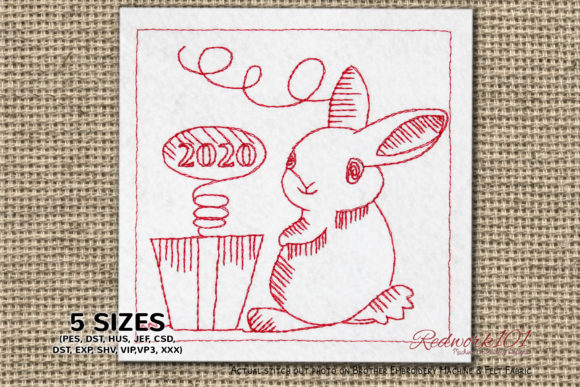
New Year Bunny Design: Craft Fair Review
When I first opened the New Year Bunny Design file, I immediately recognized its potential for the craft fair circuit. This is not a shy, barely-there embellishment. It strikes a balance between festive celebration and soft, approachable charm. The bunny anchor gives it a gentle, baby-animal warmth, while the New Year theme keeps it celebratory without being loud. The optional Box Stitch adds a structural frame that can either contain the design or be dropped entirely for a freestanding look. For anyone selling handmade products at weekend markets, this is the kind of machine embroidery design that stops browsers and turns them into buyers.
First Impressions at the Booth
Displaying the New Year Bunny Design on a finished tote bag or apron draws immediate attention. The bunny reads as cute but not childish, which is a sweet spot for craft fair customers. The New Year element gives it a seasonal hook, but the design itself is not so holiday-specific that it becomes unsellable after January. That is a major advantage for Etsy sellers and small shop owners who need inventory that moves across multiple markets.
The Box Stitch, when included, creates a crisp border that makes the design feel like a framed piece of art. I tested it on a cream-colored tea towel, and the outer box gave the embroidery a premium, almost heirloom quality. When I skipped the box stitch, the bunny felt more playful and organic, which worked better on a patch or a cap. The embroidery file gives you this flexibility, and that is rare in commercial designs. You can adapt the same digital embroidery file for two completely different product moods.
Tote Bags and Market Bags
The New Year Bunny Design sits beautifully on a medium-weight canvas tote. I stitched it at a size that allowed the bunny details to remain crisp without crowding the bag surface. The box stitch, when used, gives the tote a structured, boutique look. Customers at a recent Sunday market picked up the bag immediately, commenting on the clean stitching and the festive feel. For craft fair product displays, this design works as a focal point, not just a filler.
Aprons and Tea Towels
Apron embroidery with this design reads as cheerful and kitchen-friendly. The bunny motif fits the Baby Animals category naturally, but the New Year twist keeps it from being too generic. On a tea towel, the design works as a centered statement or a corner accent. I stitched one on a linen towel with the box stitch in a contrasting color, and the result was both elegant and playful. The thread colors I chose were a soft cream, a muted gold, and a dusty rose, which gave the piece a modern farmhouse vibe that sold within an hour of booth opening.
Embroidered Patches
Patches are a high-margin product for any handmade product seller. The New Year Bunny Design translates well to patch format, especially when the box stitch is used as a border. I made a small run of iron-on patches with the bunny and the box in contrasting colors. They moved quickly, especially among younger customers looking for bag or jacket embellishments. The design maintains clarity at patch size, which is not always the case with detailed machine embroidery designs.
Caps and Small Pouches
On a curved cap surface, the New Year Bunny Design requires careful hoop placement, but the result is worth the effort. I used a cap hoop and a lightweight stabilizer, and the design stitched out cleanly without distortion. The box stitch, when included, helped anchor the design on the curve. For small fabric pouches, the bunny works as a centered motif or a subtle brand mark. These make excellent add-on items at a booth, especially when bundled with a matching tote or towel.
Pillow Covers and Giftable Items
A pillow cover embroidered with this design becomes a conversation piece. I stitched one on a natural linen pillow cover, using the box stitch in a warm terracotta. The result was a piece that felt both handmade and store-quality. For handmade gift sets, pairing a bunny-embroidered towel with a matching pouch creates a cohesive offering that customers perceive as higher value.
Practical Production Notes for Batch Sewing
If you plan to produce this design in quantity for a craft fair, there are a few points to consider. The stitch density is moderate, which means the design sews out at a reasonable speed without excessive thread changes. I recommend testing the design on scrap fabric first, especially if you plan to use a dense fabric like twill or a textured fabric like linen. The box stitch, if included, adds a small amount of extra stitching time, but it also adds perceived value.
One of the strengths of the New Year Bunny Design is that the outer box color can be a different color from the bunny itself. The product description notes that the color of outer Box is different color in most of the designs unless it is part of the design itself, and you can skip the color directly if you prefer. This means you have full control over the palette. For batch production, I recommend choosing a box color that complements your fabric while letting the bunny remain the star. If you want a softer look, skip the box entirely and let the bunny stand alone.
Hoop Size and Stabilizer Choices
Check your hoop size before committing to a large batch. The New Year Bunny Design fits standard hoop sizes, but you should confirm the exact dimensions in your embroidery file before cutting fabric. For medium-weight fabrics like cotton or linen, I use a tear-away stabilizer. For stretchy fabrics or caps, a cut-away stabilizer gives better stability. The design does not have excessive stitch density, so it performs well on most fabric types, but always test on the actual fabric you plan to use.
Fabric Texture and Color Considerations
On textured towels or thick fabrics, the bunny details remain readable because the design avoids tiny, fussy elements. The box stitch, when stitched on a textured towel, creates a subtle frame effect that actually enhances the overall look. For dark fabric, choose thread colors that contrast well. A cream or white bunny on a navy towel is striking. The New Year Bunny Design does not rely on dense fill stitching, so it avoids the puckering that can happen on dark fabrics with heavy designs.
Photographing and Listing Your Finished Products
For Etsy sellers and online shops, the New Year Bunny Design photographs beautifully. The optional box stitch gives you two distinct looks to photograph, which means more variety in your listings. I recommend creating a printable mockup for your online store, but also stitching at least one real sample for photography. Real stitching shows texture and thread sheen that no mockup can fully capture.
When listing your finished products, highlight the design's flexibility. Mention that the box stitch is optional and can be customized in color. Customers appreciate knowing they can request a different box color or no box at all. This turns a standard product into a customizable handmade product that feels personal.
Booth Display and Customer Engagement
At a craft fair, the New Year Bunny Design draws people in because it is both familiar and fresh. The bunny appeals to animal lovers, while the New Year theme gives it a reason to exist beyond generic cuteness. I displayed a tote bag, a tea towel, and a patch sample on a small easel, and customers consistently stopped to touch the stitching. The box stitch, in particular, invited comments about the craftsmanship. One customer said it looked like a framed picture, which is exactly the kind of quality perception you want for your craft fair product.
For commercial embroidery sellers, this design is a reliable addition to your catalog. It works for seasonal markets, but it is not so tied to a specific holiday that it becomes obsolete. You can market it for New Year, for spring, or simply as a cute bunny design. The Baby Animals category is evergreen, and the Embroidery type means it is ready for production across multiple product lines.
Final Designer Checklist Before You Sew
Before you start production, run through this checklist:
- Test the design on scrap fabric to confirm stitch quality and thread tension. The New Year Bunny Design sews cleanly, but every machine behaves differently.
- Check thread contrast between the bunny, the box stitch, and your fabric. The box color can be different, so test a few combinations.
- Review spacing on your product. The design works as a centered motif, but it also works as a smaller accent. Test both placements.
- Confirm hoop size before cutting fabric. The embroidery file should specify the hoop dimensions needed.
- Inspect stitch density on your test piece. If the fabric shows any pull or puckering, adjust your stabilizer or reduce density slightly.
- Use the right stabilizer for your fabric. Tear-away for stable fabrics, cut-away for stretchy or textured materials.
- Create at least one real mockup for photography and display. A physical sample always sells better than a digital image.
- Compare fabric colors with your thread palette. The bunny should pop, not blend into the background.
- Confirm commercial licensing before selling finished products. If you purchased the design assets from a digital shop, verify that your license covers selling the finished items.
Bringing It All Together for Your Booth
The New Year Bunny Design is a solid choice for any embroidery business owner who wants a design that sells itself. It is cute without being cloying, festive without being limited, and flexible enough to work on tote bags, tea towels, patches, caps, pouches, and pillow covers. The optional box stitch gives you two designs in one file, which is a practical advantage for batch production. Customers notice the quality, and the design photographs well for online listings.
If you are preparing for an upcoming craft fair, I recommend stitching a few samples in different colorways and on different products. Let the New Year Bunny Design do the talking. It is one of those designs that earns its place in your booth, not because it is flashy, but because it is genuinely appealing. And that is the kind of handmade product that keeps customers coming back to your table.